
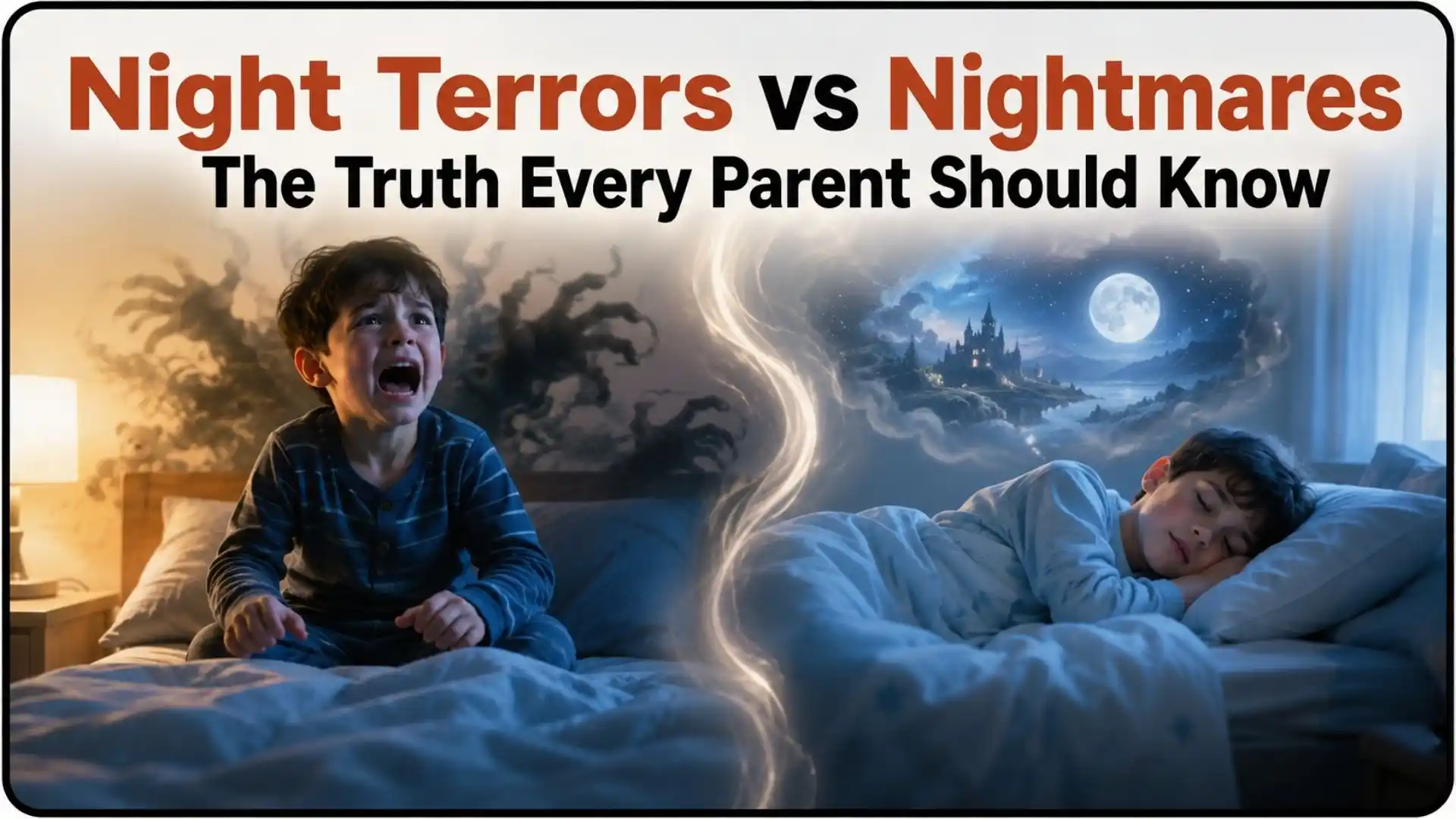
Night terrors vs nightmares may seem similar, but they happen in different sleep stages and affect people in different ways. A nightmare is a frightening dream that usually wakes you fully, and you can often remember what happened. A night terror happens during deep non-REM sleep and may cause screaming, sweating, thrashing, or sitting up in bed while the person remains partly asleep.
Understanding the difference between nightmares and night terrors can help parents, adults, and caregivers respond safely. This guide explains the symptoms, causes, timing, memory, treatment, and practical steps you can take during each episode.
Quick Answer ⚡
The main difference between night terrors and nightmares is awareness. A person usually wakes fully after a nightmare and may remember the frightening dream. During a night terror, the person remains partly asleep and may scream, sweat, sit up, or move without knowing what is happening.
Night terrors usually happen during deep non-REM sleep in the first part of the night. Nightmares usually occur during REM sleep, often later at night. Both can feel upsetting, but they need different responses.
TL;DR 🌙
- Nightmares happen mainly during REM sleep, usually later at night.
- Night terrors happen during deep non-REM sleep, often early in the night.
- A person usually remembers a nightmare but has little or no memory of a night terror.
- Night terrors may cause screaming, sweating, kicking, thrashing, or open eyes.
- Someone having a nightmare usually wakes fully and accepts comfort.
- During a night terror, focus on safety and avoid forcefully waking or restraining the person.
- Common triggers include stress, illness, sleep deprivation, trauma, and irregular sleep schedules.
- Keep a sleep diary to track timing, symptoms, triggers, and memory.
- Seek medical advice if episodes are frequent, dangerous, begin in adulthood, or affect daily life.
You Might Also Like That: Your Dreams Meaning
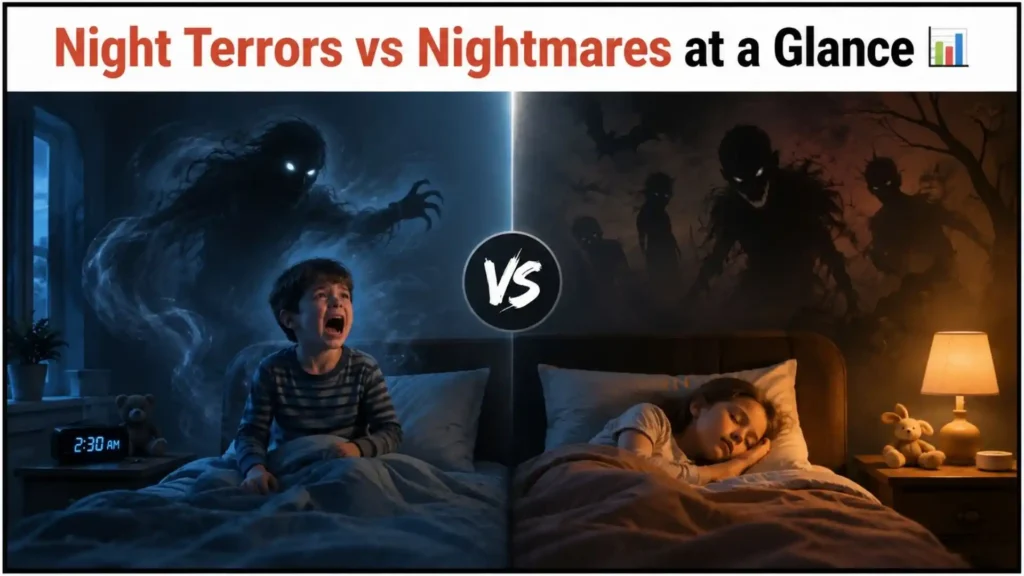
Night Terrors vs Nightmares at a Glance 📊
This table provides a simple nightmare vs night terror comparison:
| Feature | Night Terrors | Nightmares |
| Sleep stage | Deep non-REM sleep | REM sleep |
| Timing | Early in the night | Later in the night |
| Awareness | Partly asleep | Fully awake afterward |
| Memory | Little or no memory | Dream often remembered |
| Behavior | Screaming, sweating, thrashing | Waking scared or upset |
| Comfort | Hard to comfort | Usually accepts comfort |
| Common age | More common in children | Common at any age |
| Main risk | Injury during movement | Fear and broken sleep |
What Is a Night Terror? 😨
A night terror, also called a sleep terror, is a type of parasomnia that happens during deep sleep. The person may suddenly scream, sit up, breathe quickly, sweat, kick, or thrash in bed. Their eyes may appear open, but they are not fully awake.
Someone having a night terror may not recognize a parent or partner. They may resist comfort and return to sleep soon afterward. In most cases, they remember little or nothing the next morning because the episode did not happen during a normal waking state.
What Is a Nightmare? 🌙
A nightmare is a frightening or upsetting dream that usually happens during REM sleep. The dream may involve danger, loss, falling, being chased, or another stressful event. The person often wakes fully and can describe parts of the dream.
Unlike a night terror, a nightmare does not usually involve intense movement or confusion. The person may feel scared, cry, seek comfort, or struggle to return to sleep. Recurring nightmares can affect mood, energy, concentration, and the desire to go to bed.
How to Tell a Night Terror From a Nightmare
Several signs can help you understand whether an episode was a night terror or nightmare. Pay attention to when it happened, whether the person woke fully, how they behaved, and what they remembered later.
Timing During the Night ⏰
Night terrors often happen in the first third or first half of the night, when deep non-REM sleep is strongest. Nightmares usually happen later, when REM sleep periods become longer.
Timing alone cannot confirm the cause, but it offers a useful clue. Keeping a sleep diary can help parents or adults notice whether episodes follow the same pattern each night.
Awareness and Memory 🧠
A person having a night terror remains partly asleep. They may look awake but respond with confusion or no clear recognition. The next morning, they usually have no memory of the event.
After a nightmare, the person normally wakes fully and knows where they are. They may remember the dream in detail and explain why it frightened them. Dream recall is one of the clearest differences between nightmares and night terrors.
Movement and Physical Signs
Night terrors may cause screaming during sleep, sweating, fast breathing, a rapid heartbeat, kicking, or thrashing. Some people leave the bed or move around the room.
Nightmares usually cause less physical movement. A person may wake suddenly, cry, breathe quickly, or appear frightened, but they are generally aware of their surroundings. Strong movement during sleep raises a greater safety concern and may need medical advice if it happens often.
Response to Comfort ❤️
Someone who wakes from a nightmare usually accepts reassurance. A calm voice, gentle support, and a reminder that the dream was not real can help them settle.
During a night terror, the person may push others away, shout, or become more distressed when someone tries to wake them. Stay nearby, protect them from injury, and allow the episode to pass. Avoid shaking, shouting, or forcefully restraining them.
Night Terrors and Nightmares in Children 👧
Night terrors in children are more common than they are in adults. They often appear during early childhood and may happen when a child becomes overtired, ill, stressed, or follows an irregular sleep schedule.
Nightmares in children are also common because children are still learning how to understand fear and imagination. A child may remember a monster, accident, or scary event from the dream. Most occasional episodes improve with age, regular sleep, comfort, and a calm bedtime routine.
Night Terrors and Nightmares in Teenagers 🧑
Teenagers may experience nightmares because of school pressure, anxiety, frightening media, trauma, or poor sleep. Late-night screen use and changing sleep schedules can also disturb their normal sleep cycle.
Night terrors are less common in teenagers than in young children, but they can still occur. Frequent episodes, new symptoms, injury, severe daytime tiredness, or sudden behavior changes deserve attention. Parents should listen calmly and avoid making the teenager feel embarrassed about something they cannot control.
Night Terrors and Nightmares in Adults
Adults can have both nightmares and night terrors. Recurring nightmares in adults may relate to stress, anxiety, trauma, medication, illness, or disrupted sleep. Some adults experience nightmares connected with post-traumatic stress disorder.
Adult night terrors are less common and may involve leaving bed, shouting, or unsafe movement. New night terrors beginning in adulthood should not be ignored. A doctor or sleep specialist can check for sleep apnea, medication effects, stress, or another sleep condition.
What Causes Night Terrors?
The exact cause of night terrors is not always clear. However, several factors may increase the chance of an episode:
- Sleep deprivation
- Fever or illness
- Emotional stress
- Irregular bedtime
- Sudden sleep disruption
- Family history
- Sleep apnea
- Restless legs syndrome
- Alcohol or certain medicines
Night terrors may happen when the brain struggles to move smoothly from deep sleep into a lighter sleep stage. Children may be more vulnerable because their sleep system is still developing.
You Might Also Like That: Your Dreams Meaning
What Causes Nightmares?
Nightmares can develop after stress, anxiety, trauma, illness, or a frightening experience. Scary movies, upsetting news, or intense stories before bed may also affect children.
Certain medicines, including some antidepressants and beta-blockers, may influence dreams. Lack of sleep can also make nightmares more vivid. Frequent nightmares may occur with anxiety disorders, depression, PTSD, or nightmare disorder. However, one bad dream does not mean someone has a medical or mental health condition.
What to Do During a Night Terror 🛡️
Stay calm and focus on safety. Do not shake, shout at, or forcefully wake the person. They may feel more confused because they remain partly asleep.
Move sharp objects away, block access to stairs, and gently guide them away from danger. Avoid holding them down unless you must prevent immediate injury. Speak softly and wait for the episode to pass. Most people return to normal sleep without needing comfort or remembering what happened.
What to Do After a Nightmare 🤗
After a nightmare, offer comfort and help the person feel safe. Speak calmly and remind them that the dream has ended. Children may benefit from a small light, a favorite toy, or a short calming routine.
Avoid dismissing the fear by saying it was “nothing.” Instead, acknowledge the feeling without treating the dream as real. Encourage slow breathing and help the person settle back into bed. Frequent nightmares should be tracked and discussed with a professional if they affect daytime life.
Night Terror Safety Checklist ✅
Night terrors can involve sudden movement, so make the sleep area safer:
- Clear toys, wires, and sharp objects from the floor
- Lock windows and outside doors
- Use safety gates near stairs
- Avoid a top bunk
- Keep breakable items away from the bed
- Tell babysitters and caregivers what to do
- Secure dangerous areas
- Keep a clear path around the bed
A safe room lowers the risk of falls, cuts, or accidental injury during an episode.
How to Track Nighttime Episodes 📝
A simple sleep diary can reveal patterns. Record the date, bedtime, episode time, length, behavior, recent stress, illness, medicine, and sleep loss.
Also note whether the person woke fully, accepted comfort, remembered a dream, or showed unusual movements. This information can help you tell night terrors from nightmares and give a doctor useful details. Videos may sometimes help a clinician, but never place yourself or the sleeper in danger while recording an episode.
How to Reduce Night Terrors and Nightmares
Healthy sleep habits cannot prevent every episode, but they may reduce common triggers.
Follow a Regular Sleep Schedule
Keep bedtime and waking time consistent, including weekends. Children and adults should get enough sleep for their age and needs.
Sleep deprivation can trigger both nightmares and night terrors. An earlier bedtime may help an overtired child. Avoid large changes in sleep times whenever possible, especially after travel, illness, or school breaks.
Reduce Stress Before Bed
Create a calm wind-down period. Try reading, gentle music, slow breathing, prayer, light stretching, or quiet conversation.
Avoid frightening films, stressful discussions, intense games, and upsetting news close to bedtime. Adults experiencing trauma-related nightmares may benefit from professional support rather than trying to manage severe distress alone.
Use Scheduled Awakenings Carefully
Scheduled awakening may help when night terrors happen at nearly the same time each night. A caregiver gently wakes the child about 15 minutes before the usual episode, keeps them awake briefly, and then allows them to return to sleep.
Discuss this method with a healthcare professional, especially when episodes are frequent. It requires consistent timing and may not suit every child or adult.
Improve the Sleep Environment
Keep the bedroom quiet, comfortable, dark, and at a suitable temperature. Reduce noise and bright light that may interrupt sleep.
Avoid caffeine near bedtime and limit late-night screen use. A stable sleep environment supports smoother sleep cycles and may reduce partial awakenings. The goal is not perfect sleep but a routine that feels safe, calm, and predictable.
Conditions That Can Look Similar
Some sleep and health conditions can resemble night terrors. A professional evaluation can help when symptoms remain unclear.
Night Terrors vs Nocturnal Panic Attacks
A nocturnal panic attack wakes the person fully. They usually feel intense fear, chest tightness, fast breathing, or a racing heart and understand that they are awake.
During a night terror, the person remains partly asleep and usually has little memory afterward. Both can look frightening, but awareness is a major difference.
Night Terrors vs Sleepwalking
Night terrors and sleepwalking are both non-REM parasomnias. A sleepwalker may quietly walk, open doors, or perform simple actions without intense fear.
A person having a night terror usually shows stronger panic, screaming, sweating, or sudden movement. The two conditions can sometimes happen together, especially in children.
Night Terrors vs Sleep Paralysis
During sleep paralysis, a person becomes aware but cannot move or speak for a short time. They may also see or sense frightening things.
Night terrors involve the opposite pattern: the person may move, shout, or thrash while remaining unaware. Sleep paralysis often occurs when falling asleep or waking, not during deep non-REM sleep.
Night Terrors vs Seizures
Some nighttime seizures can cause stiffening, jerking, unusual sounds, repeated movements, or loss of awareness. These symptoms may look like a night terror.
Seek medical advice when episodes include the same repeated movement, breathing changes, injury, loss of bladder control, daytime seizures, or unusual weakness afterward. Do not try to diagnose a seizure from online information alone.
When to Speak With a Doctor 🩺
Occasional nightmares or childhood night terrors often improve with healthy sleep habits. However, contact a healthcare professional when episodes:
- Happen frequently
- Cause injury
- Disturb the whole household
- Affect school, work, mood, or concentration
- Begin suddenly in adulthood
- Include breathing problems
- Involve stiffening or repeated jerking
- Cause fear of going to sleep
- Continue despite a regular sleep routine
A doctor may review sleep habits, medicine, stress, and possible underlying conditions.
You Might Also Like That: Your Dreams Meaning
Frequently Asked Questions
Can You Remember a Night Terror?
Most people remember little or nothing after a night terror because they remain partly asleep. Some adults may recall a brief image or feeling, but clear dream memory is uncommon.
Should You Wake Someone During a Night Terror?
Do not forcefully wake someone during a night terror. Stay nearby, remove danger, and guide them gently if needed. Sudden waking may increase confusion or distress.
Are Night Terrors Worse Than Nightmares?
Neither is always worse. Night terrors create a greater risk of physical injury, while recurring nightmares may cause emotional distress, poor sleep, and fear of bedtime.
Can Adults Have Night Terrors?
Yes, adults can have night terrors, although they occur less often than in children. New or frequent adult episodes deserve medical evaluation.
How Long Does a Night Terror Last?
Many episodes last a few minutes, although some may continue longer. Track unusually long or frequent episodes and discuss them with a doctor.
Do Children Grow Out of Night Terrors?
Many children experience fewer night terrors as their sleep system matures. Regular sleep and reduced overtiredness may help.
Can Stress Cause Both Conditions?
Yes, stress can increase the risk of both nightmares and night terrors. However, sleep loss, illness, medication, and other sleep problems may also play a role.
Why Are the Eyes Open During a Night Terror?
The eyes may open because the person is partly aroused from deep sleep. Open eyes do not mean they are fully awake or aware.
Final Thoughts 🌙
The easiest way to understand night terrors vs nightmares is to look at awareness and memory. A nightmare usually wakes the sleeper fully and leaves a clear dream memory. A night terror causes fear and movement while the person remains partly asleep and usually remembers nothing.
Stay calm, provide comfort after nightmares, and focus on safety during night terrors. Healthy sleep habits may reduce episodes, but frequent, dangerous, or unusual symptoms need professional advice.