

Dreams can feel strange, exciting, emotional, or even frightening. Every night, your mind may create different stories while you sleep. Some dreams feel normal, while others seem highly realistic or repeat again and again. The most common types of dreams include lucid dreams, vivid dreams, recurring dreams, nightmares, false awakenings, anxiety dreams, and daydreams.
Understanding the different types of dreams and their meanings can help you notice patterns in your emotions, sleep habits, and daily life. Dreams may connect with stress, memories, fears, personal experiences, or REM sleep. However, no dream has one fixed meaning for everyone. In this guide, you will learn how each dream type works, why it may happen, and how to identify the kind of dream you experienced.
Quick Answer 💡
The main types of dreams include normal dreams, lucid dreams, vivid dreams, recurring dreams, nightmares, false awakenings, daydreams, anxiety dreams, and prophetic dreams. Each type has different features. Some dreams feel real, some repeat, and others allow you to know that you are dreaming.
Dreams may connect with REM sleep, emotions, stress, memories, illness, medication, or daily experiences. However, dream meanings remain personal, so one dream symbol does not mean the same thing for everyone.
TL;DR 🌙
- The main types of dreams include normal, lucid, vivid, recurring, anxiety, prophetic, and false awakening dreams.
- Lucid dreams involve knowing you are dreaming, while vivid dreams simply feel highly real and detailed.
- Recurring dreams repeat the same theme, place, fear, or emotional pattern.
- Nightmares usually occur during REM sleep, while night terrors happen during deep non-REM sleep.
- False awakenings make you believe you have already woken up, while sleep paralysis leaves you briefly unable to move.
- Stress, trauma, illness, medication, hormones, sleep loss, and daily experiences can affect dream content.
- A dream type explains how a dream happens, while a dream theme explains what happens inside it.
- Common dream themes include falling, flying, being chased, losing teeth, and arriving late.
- Dreams do not always carry a hidden or spiritual message.
- Personal emotions, recent experiences, sleep quality, and cultural beliefs often shape dream meaning.
- Keeping a dream journal can help you identify patterns and improve dream recall.
- Frequent nightmares or dreams that disturb daily life may require professional support.
You Might Also Like That: Your Dreams Meaning
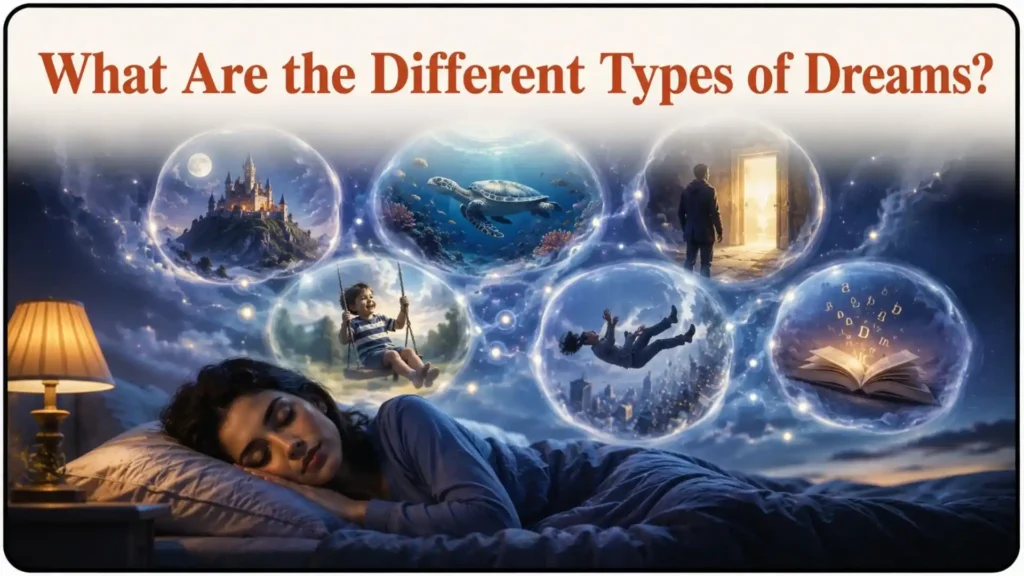
What Are the Different Types of Dreams?
Experts group dreams by their realism, emotional strength, awareness, repetition, sleep stage, and content. For example, a vivid dream feels highly realistic, while a lucid dream includes awareness that you are dreaming.
Some labels, such as nightmares and false awakenings, describe known sleep experiences. Others, including prophetic, spiritual, and healing dreams, come mainly from personal, cultural, or religious interpretations.
| Dream Type | Main Feature | Recall Level |
| Normal dream | Everyday events | Low to medium |
| Lucid dream | Awareness of dreaming | High |
| Vivid dream | Strong detail | High |
| Recurring dream | Repeated story | Medium to high |
| Nightmare | Fearful content | High |
| False awakening | Dreaming of waking up | High |
Standard or Normal Dreams
Standard dreams, also called normal or ordinary dreams, often include people, places, and events from daily life. You may dream about work, family, school, travel, or a recent conversation.
These dreams often use day residue, which means your mind brings recent waking experiences into sleep. Normal dreams may look strange because the brain mixes memories, emotions, and imagination. They do not always carry a deep message, but they can reflect what has recently occupied your thoughts.
Lucid Dreams
A lucid dream happens when you realize that you are dreaming while the dream continues. You may simply notice the dream state, or you may influence the setting, people, or actions.
Lucid dreams often happen during REM sleep, when dreaming becomes more detailed. People may use reality checks or dream journals to improve awareness. However, knowing that you are dreaming does not always give you full control over every part of the experience.
Can You Control a Lucid Dream?
Some people can change small parts of a lucid dream, such as flying, opening a door, or choosing where to go. Others only remain aware without controlling anything.
Dream control often depends on practice, calmness, and how stable the dream feels. Strong excitement may cause you to wake up. It is better to view lucid dreaming as dream awareness rather than complete control.
Are Lucid Dreams Safe?
Lucid dreams are usually harmless. However, frequent attempts to trigger them may interrupt sleep, especially when people wake themselves during the night.
A healthy sleep routine should remain more important than dream control. People who often feel confused between dreams and waking life should avoid forcing lucid dreams and focus on regular, restful sleep.
Vivid Dreams
Vivid dreams feel clear, detailed, emotional, and realistic. You may remember colours, voices, places, touch, or strong feelings after waking. These dreams often remain in your memory longer than normal dreams.
Stress, medication, illness, pregnancy, sleep deprivation, and REM rebound may increase vivid dreaming. REM rebound happens when the body spends extra time in REM sleep after missing sleep. A vivid dream may feel meaningful, but strong detail alone does not prove that it carries a special message.
Lucid Dreams Versus Vivid Dreams
People often confuse lucid dreams and vivid dreams, but they are not the same.
| Feature | Lucid Dream | Vivid Dream |
| Awareness of dreaming | Usually yes | Not always |
| Dream control | Sometimes possible | Usually absent |
| Strong details | May occur | Very common |
| Easy to remember | Often | Often |
A dream can be both lucid and vivid. You might know you are dreaming while also seeing realistic colours, hearing sounds, and feeling strong emotions.
Recurring Dreams
Recurring dreams repeat the same story, place, person, fear, or emotional pattern. The exact details may change, but the main theme stays similar.
Stress, unresolved worries, major life changes, and repeated daily pressure may influence these dreams. Common examples include being chased, arriving late, losing something, or failing an exam. Keeping a dream journal can help you identify patterns between recurring dreams and events in your waking life.
Recurring Dreams Versus Recurring Nightmares
A recurring dream may feel pleasant, neutral, strange, or upsetting. A recurring nightmare, however, creates strong fear or distress and may wake you from sleep.
Both experiences repeat, but nightmares have a stronger negative emotional effect. Frequent recurring nightmares may connect with trauma, anxiety, medication, or poor sleep quality.
Nightmares
Nightmares are frightening dreams that often cause sudden waking. People usually remember them because fear makes the experience feel intense.
Possible causes include stress, anxiety, trauma, fever, medication, sleep deprivation, frightening media, and major life changes. Occasional nightmares are common. However, frequent nightmares that disturb sleep or affect daytime life may need professional attention. A nightmare is different from a bad dream because it usually causes stronger fear and may wake the sleeper.
Nightmares Versus Night Terrors
Nightmares usually happen during REM sleep, and people often remember the story after waking. Night terrors usually happen during deep non-REM sleep and may involve screaming, sweating, or sudden movement.
| Feature | Nightmare | Night Terror |
| Sleep stage | Usually REM | Deep non-REM |
| Memory afterward | Often clear | Usually limited |
| Waking | Common | Person may remain partly asleep |
| Classification | Dream | Parasomnia |
Night terrors are not ordinary dreams. They belong to a group of sleep behaviours called parasomnias.
False Awakening Dreams
A false awakening happens when you dream that you have already woken up. You may get dressed, check your phone, eat breakfast, or prepare for work before realizing that you are still asleep.
Some people experience several false awakenings in a row, creating a dream loop. These dreams often feel realistic because they copy familiar morning routines. Sleep interruption, vivid dreaming, and increased dream awareness may make them more likely.
False Awakening Versus Sleep Paralysis
During a false awakening, you remain asleep and dream that you have woken up. During sleep paralysis, your mind becomes partly awake while your body remains temporarily unable to move.
Both experiences can feel real and confusing. Sleep paralysis may also include fear, pressure, sounds, or dreamlike images. Unlike a false awakening, it happens near waking or falling asleep and usually lasts only a short time.
Daydreams
Daydreams happen while you are awake. Your attention moves away from your surroundings and into imagined scenes, memories, plans, or wishes.
Daydreaming may support creativity, problem-solving, planning, and emotional rest. For example, you may imagine reaching a goal or rehearse a future conversation. Daydreams differ from sleep dreams because you remain awake and can usually return your attention to the present whenever you choose.
Anxiety and Stress Dreams
Anxiety dreams often involve pressure, failure, embarrassment, danger, or loss of control. Common examples include missing an exam, arriving late, being unprepared, or losing something important.
These dreams may become more common during stressful periods. They do not always predict a problem. Instead, they may reflect emotional pressure from waking life. Improving sleep habits, reducing stress, and writing down repeated themes may help you understand why they occur.
You Might Also Like That: Your Dreams Meaning
Prophetic or Precognitive Dreams
Prophetic dreams, also called precognitive dreams, appear to predict a future event. Many cultures and spiritual traditions give these dreams special meaning.
Science has not confirmed that dreams can reliably predict the future. Coincidence, memory changes, and selective attention may explain some experiences. Still, a prophetic dream may feel personally important. It is best to explore it with an open but careful mind rather than treating it as certain proof.
Healing, Grief, and Visitation Dreams 🌙
Healing dreams may bring comfort, emotional release, or a sense of peace after fear, conflict, illness, or loss. They do not replace medical treatment, but they may help someone process difficult feelings.
Grief or visitation dreams involve a person who has died. These dreams can feel unusually real and comforting. Some people view them as spiritual contact, while others see them as part of memory and emotional processing. Both views depend on personal beliefs.
Epic and Progressive Dreams
Epic dreams are long, powerful, detailed dreams that may remain memorable for years. They often include complex places, dramatic events, and strong emotions.
Progressive dreams appear to continue across several nights, almost like episodes in a story. These labels describe the way dreams feel rather than formal medical categories. They may stand out because they contain repeated characters, settings, or goals that create a connected dream world.
Fever and Pregnancy Dreams
Fever dreams often feel strange, intense, or confusing. Illness, body temperature, discomfort, and interrupted sleep may change dream content.
During pregnancy, hormonal changes, physical discomfort, anxiety, excitement, and frequent waking may cause vivid pregnancy dreams. These dreams may focus on babies, family, safety, or major changes. Neither fever dreams nor pregnancy dreams have one fixed meaning. They often reflect changes in the body and emotions.
Hypnagogic and Hypnopompic Experiences
Hypnagogic experiences happen while you fall asleep, while hypnopompic experiences happen while you wake up. They may include lights, faces, voices, movement, or a feeling that someone is nearby.
These brief experiences can feel dreamlike and realistic. They are not always full dreams because they happen during the change between waking and sleeping. Stress, sleep loss, and irregular sleep schedules may make them more noticeable.
Sensory Dreams
Dreams can involve more than sight. Some people hear music, feel touch, smell scents, taste food, or experience pain and temperature while dreaming.
Real sensations may sometimes enter a dream. For example, a cold room may appear as snow, or outside noise may become part of the dream story. Sensory dreams show that the sleeping brain can build experiences from memory, emotion, imagination, and signals from the environment.
Can Blind People Have Visual Dreams?
People who lost their sight later in life may still experience visual images in dreams because they have visual memories. People born blind often dream through sound, touch, smell, emotion, movement, and spatial awareness.
Dreams do not depend only on vision. The brain can create detailed dream worlds using many senses. This shows why dream experiences differ widely from one person to another.
REM Dreams Versus Non-REM Dreams
Dreams can happen during both REM and non-REM sleep. REM dreams often feel more emotional, visual, and story-like. Non-REM dreams may involve simpler thoughts, short scenes, or daily activities.
| Feature | REM Dreams | Non-REM Dreams |
| Detail | Often strong | Usually simpler |
| Emotion | Often intense | Often calmer |
| Storyline | More complex | Less developed |
| Recall | Often clearer | Often weaker |
Most vivid dreams and nightmares occur during REM sleep, but dreaming is not limited to REM.
What Causes Different Types of Dreams?
Many factors shape dream content, including stress, emotions, memories, sleep stages, medication, illness, hormones, trauma, and daily experiences.
Poor sleep quality may also increase vivid or disturbing dreams. Noise, pain, room temperature, alcohol, and sleep interruption can affect the sleep cycle. Dreams rarely come from one cause alone. The brain usually combines physical sensations, recent events, old memories, and emotional concerns into one experience.
Dream Types Versus Dream Themes
A dream type explains how the dream happens. A dream theme explains what happens inside it.
| Dream Type | Possible Theme |
| Lucid dream | Flying |
| Nightmare | Being attacked |
| Recurring dream | Arriving late |
| Vivid dream | Teeth falling out |
| Anxiety dream | Failing an exam |
For example, “being chased” is not a dream type. It is a theme that may appear inside a nightmare, recurring dream, or anxiety dream.
Common Dream Themes
Falling Dreams
Falling dreams may happen during stress, uncertainty, or loss of control. They may also occur when the body relaxes suddenly while falling asleep.
Being Chased
Dreams about being chased often involve fear or avoidance. The pursuer may represent a real concern, emotional pressure, or an imagined danger.
Teeth Falling Out
Teeth dreams may connect with appearance, communication, health worries, or personal change. Their meaning depends on the dreamer’s situation.
Flying Dreams
Flying may feel joyful, powerful, or frightening. Some people connect it with freedom, ambition, escape, or a wish for control.
Being Late or Unprepared
These dreams often occur during periods of pressure. They may reflect fear of failure, missed opportunities, deadlines, or high expectations.
Death and Dying Dreams
Death dreams do not usually predict real death. They may reflect change, endings, fear, grief, or the beginning of a new stage.
Can One Dream Belong to Several Types?
Yes, one dream can fit several categories. A dream may be lucid and vivid, recurring and frightening, or both a false awakening and part of a nightmare.
Dream categories often overlap because they describe different parts of the experience. One label may describe awareness, another may describe emotion, and another may describe repetition. Using several labels can help you understand the dream more accurately.
How Dreams Change With Age
Children often have imaginative dreams and may experience more nightmares or night terrors. Teenagers may dream about school, relationships, identity, and social pressure.
Adult dreams often reflect work, family, money, and daily responsibilities. Older adults may notice changes in dream recall because sleep patterns and REM sleep can change with age. Health, medication, stress, and life experiences also shape dreams throughout life.
Do Cultures Classify Dreams Differently?
Different cultures may view dreams as messages, warnings, spiritual visits, emotional reflections, or signs from the unconscious mind.
Some traditions place great value on prophetic or visitation dreams. Modern psychology often focuses on memory, emotions, and waking-life experiences. No single system explains every dream. Cultural background can strongly influence how a person understands symbols, people, animals, and events in dreams.
Do All Dreams Have a Meaning?
Not every dream carries a hidden message. Some dreams may simply combine memories, emotions, body sensations, and random brain activity.
When a dream feels important, focus on your personal context. Ask what emotions you felt, what happened recently, and whether the dream repeats. Universal dream dictionaries can offer ideas, but they cannot know your private memories, beliefs, fears, or relationships.
How to Identify the Type of Dream You Had ✅
Ask yourself these questions:
- Did I know I was dreaming?
- Did the dream feel unusually real?
- Has it happened before?
- Did fear wake me?
- Did I dream that I had awakened?
- Did it happen while falling asleep or waking?
- Was I stressed, ill, grieving, or taking medication?
Your answers can help you identify whether the experience was lucid, vivid, recurring, frightening, or linked with a sleep transition.
How to Remember and Track Your Dreams
Keep a dream journal beside your bed and write before checking your phone. Record the main emotion, people, setting, actions, and repeated themes.
Also note your sleep quality, stress, illness, and medication. You do not need to write every detail. A few clear notes can reveal useful patterns over time. Reviewing your journal may help you understand what causes different types of dreams.
When Disturbing Dreams May Need Attention
Occasional bad dreams are normal. However, consider speaking with a healthcare professional when dreams regularly interrupt sleep, cause strong daytime fear, follow trauma, or lead to serious tiredness.
Seek guidance if you shout, hit, kick, or act out dreams. You should also discuss sudden dream changes after starting medication. Professional help can identify sleep problems and provide safe support without relying only on dream interpretation.
You Might Also Like That: Your Dreams Meaning
Frequently Asked Questions
How Many Types of Dreams Are There?
There is no fixed number. Dream categories overlap, and experts classify them in different ways. Most guides include between seven and fifteen common types.
What Is the Most Common Type of Dream?
Normal dreams involving everyday people, places, worries, and recent events appear to be the most common.
Why Do Some Dreams Feel Real?
Vivid detail, strong emotions, REM sleep, and waking directly after a dream can make it feel highly realistic.
Can Dreams Predict the Future?
Science has not shown that dreams can reliably predict future events. People may still interpret certain dreams spiritually or personally.
Can You Dream Without Remembering It?
Yes. Most people dream several times but forget much of the content soon after waking.
Are Bad Dreams Always Nightmares?
No. A bad dream may feel unpleasant without waking you. A nightmare usually creates stronger fear and often causes waking.
Final Thoughts 🌙
The many types of dreams show how creative and complex the sleeping mind can be. Dreams may feel normal, vivid, lucid, frightening, repeated, or deeply emotional.
Understanding different types of dreams and their meanings can help you notice patterns in your sleep and waking life. Still, no dream has one universal meaning. Focus on your emotions, recent experiences, health, sleep quality, and personal beliefs when exploring what a dream may mean.